
Global Cancer Research and Control Seminar Series 2025 (Upcoming Webinars)
Thursday, December 10, 2026 | 10:00 a.m. to 11:00 a.m. ET
Building Caregiver Education Together: A Multimedia Approach to Childhood Cancer Care in Tanzania (Virtual)
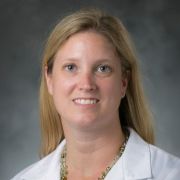 Kristin Schroeder, M.D., M.P.H., Associate Professor in Pediatric Hematology/Oncology, Associate Research Professor of Global Health, and Director
Duke Cancer Center, Global Oncology Program
Kristin Schroeder, M.D., M.P.H., is currently an Associate Professor in Pediatric Hematology/Oncology, Associate Research Professor of Global Health, and Director of Duke Cancer Center’s Global Oncology Program. She completed her Pediatric Hematology-Oncology, Neuro-Oncology and Global Health Fellowships at Duke University, Pediatrics Residency at UNC Children’s Hospital, her M.P.H. at West Virginia University and M.D. from Georgetown University.
Since 2014, Dr. Schroeder has spent six months of each year in Tanzania, collaborating with clinicians and administrators to develop a pediatric cancer program at Bugando Medical Center. In addition to developing capacity for pediatric cancer care, her research focuses on creating interventions to improve pediatric cancer outcomes and reducing treatment incompletion in low resource settings. Dr. Schroeder’s work in global oncology inspired her to co-found ICCARE, a non-profit whose mission is to give any child who is diagnosed with cancer the same chance of cure regardless of where they live.
 Erica Samson Sanga, Ph.D., Senior Research Scientist and Community Engagement Coordinator
National Institute for Medical Research (NIMR) Mwanza Centre, Tanzania
Erica Samson Sanga, Ph.D., is a Senior Research Scientist and Community Engagement Coordinator at the National Institute for Medical Research (NIMR) - Mwanza Centre in Tanzania. She is a public health scientist with more than 20 years of experience leading community-engaged and implementation-focused research in low-resource settings, with strong expertise in qualitative methods, stakeholder engagement, and health systems research.
Dr. Sanga has served as Co–Principal Investigator on three NCI-sponsored research projects, including studies focused on pediatric cancer awareness, stigma, digital case management, and the development of culturally tailored caregiver education programs in Tanzania. Her work has supported the integration of community perspectives into cancer research and care delivery, informing interventions aimed at improving early diagnosis, treatment engagement, and outcomes for children with cancer.
Dr. Sanga is also actively involved in research capacity strengthening, mentoring early-career scientists, and serves as a part-time lecturer in public health at the Catholic University of Health and Allied Sciences (CUHAS) in Mwanza. Her work emphasizes aligning rigorous cancer research with community priorities to support sustainable, equitable improvements in cancer prevention and care in low- and middle-income countries.